Saturday, July 25, 2009

Martinezes Celebrate First Anniversary

Today marks the first anniversary of the July 25, 2008, wedding of my longtime friend and fellow ConocoPhillips employee Patricio Martinez and his beautiful bride Norma. The Martinezes recited their marriage vows in front of family and friends on this day last year in Freeport, Texas. It was the second marriage for both bride and groom, and they are now making their home in Angleton, Texas. Pat and I have worked together for nearly 20 years in the Utilities Department at ConocoPhillips's Old Ocean refinery. He has been a dear friend over the many years we have worked together and I would like to take this opportunity to congratulate Pat and Norma on their first anniversary. Peggy and I wish the two of you the best in the years to come.
Among the coworkers of Pat Martinez who attended his wedding last year were (in addition to myself, Charles Wilbanks, Mike Whitten and Larry Dever) Syl Hajovsky (pictured above at left) and Marvin Graham (pictured above at right). In the photo above those two is Mike Whitten and his date who sang during the marriage ceremony.
ConocoPhillips Utilities Department Team Leader Jerry Louvan and his wife enjoyed themselves at the July 25, 2008 wedding of my coworker Pat Martinez and his bride Norma.
Pat's coworkers Marvin Graham, left, and Mike Whitten demonstrating a tad too much fondness for each other at the wedding last year.

Wednesday, July 22, 2009

Reflecting On 43 Years Of Friendship

Ever since my high school days more than 30 years ago, the date July 23rd has had special meaning to me. So it is fitting that I select Thursday, July 23, 2009, to salute my longtime close friend Harold Tolbert of Austin, Texas, and reflect on our 43 years of friendship. July 23rd is both Harold's birthday and his wedding anniversary. I have always been in awe of H.T.'s slick idea to get married on his birthday. What man hasn't forgotten his anniversary at least once in his life? Easy answer. Harold Tolbert. Every year on July 23rd when my buddy turns another year older, he and his lovely wife Rhonda pop the cork on a bottle of champagne or wine and toast their wedding anniversary. So today, with great love and respect to the "Shammy Dog," my home boy H.T. celebrates his 53rd birthday. I started giving him birthday cards around 1973 on July 23rd and don't believe I have ever missed sending him birthday greetings through the postal service or via telephone call in the 36 years since. As you can see from the photo above of the two of us taken earlier this year, one of us has not aged very well (and it's not the brother) but what hasn't suffered from the ravages of time is the devotion and level of love and respect the two of us feel for one another. I cannot speak for my longtime pal, but speaking solely for myself I have to say that Harold Tolbert has been just like a brother to me since we were in high school in West Columbia in the 1970s. But the genesis of our relationship began years before the two of us started hanging together when we were young teenagers.
When my children throw questions my way about my childhood and teenaged years they often want to know about segregation. All of my boys are grown now and they all grew up attending the same schools that their mother and father went to back in the day, but with one major difference. Peggy and I started school at West Columbia Elementary School in 1963, actually receiving our first grade educations in adjoining classrooms. Our children have lived their lives in an integrated world where children of all races coexist in practically every facet of the modern American way. But it wasn't always that way. Harold Tolbert and other black children my age, from the elementary grades all the way up to seniors in high school, were segregated away from the white children in West Columbia. The Charlie Brown School, sitting on property donated by a former slave named Charlie Brown who became a millionaire later in life after being freed along with all the other Negroes in our nation at the close of the Civil War, is a mere three blocks from the property I have called my home since I was five years old. West Columbia was a generic Southern town in America in the 1960s. In the time of my early childhood white children such as myself went to school and church without seeing any black faces, swam in the public swimming pool in town where no children or adults of color were allowed, and downed their ice cold sodas and hot buttered popcorn in The Capitol Theater where the popular movies of the day were shown and any blacks attending the town's movie theater had to enter through a separate side door and sit in the balcony, kept separated from all of the white people sitting below.
It was not until 1966 that black children were allowed to attend the former all-white schools in the Columbia-Brazoria Independent School District in West Columbia and Brazoria. And then our school district approached "integration" of the races on what would have to be labeled more of a trial basis. The majority of black students continued attending the Charlie Brown school in West Columbia and Henry O. Tanner school in Brazoria during the 1966-67 school year, while a handful of black children and teenagers ventured into a world of the unknown by becoming the first children of their race to walk the halls of formerly segregated elementary schools in the two neighboring Brazoria County towns and the junior high and high school in West Columbia. My longtime close friend Harold Arlean Tolbert Jr. and his cousins Herbert Cotton and Margo Diggs were among the few black fourth graders we had in West Columbia. Both Harold and Margo were in Joyce Lester's fourth grade classroom with me and my other white classmates. Herbert was in Mrs. Askew's classroom next door to ours. Harold and I hit it off well practically from the start when we were in the fourth grade. I can still vaguely recall playing with Harold on the playground at the old elementary school that has since been a victim of the wrecking ball. I remember how entertaining he was, always talking like Donald Duck and displaying a hyper personality while keeping me laughing when we all went outside to play. Margo and Harold are both very intelligent people who quickly erased the opinion I had created in my young mind of Negroes being "a lesser race of people" that had been created by my existing in an isolated, uninformed world of public segregation. While Harold and I didn't become best friends until high school, that fourth grade "experimental" year was when the seeds of friendship were actually planted. I have a strong, vivid memory of one incident during that year when my friendship with Harold was in its infancy that, for some odd reason, stands out more than the others. I remember Mrs. Lester had stepped out of the classroom for some reason. She had given her students instructions to stay at our desks and work on some project or read a book or something like that. She wasn't gone long when Vernon Whitehead and Richard Cole began chasing each other around the room and one of them bumped into Harold's desk, sending my black friend tumbling over in his chair and his desk falling on top of him while Vernon and Richard continued their horseplay. When Mrs. Lester came walking back in the room she saw me helping my new friend get out from under his desk and put his books and school supplies back in it. Harold was crying and Mrs. Lester asked him was he crying because he was hurt or just because he was mad. I don't remember what Harold said in reply, but I know that particular incident went a long way in totally altering my opinion of black people and putting me on a path, which I admit took many years to walk, of acceptance of my fellow human beings, regardless of their race and different backgrounds and upbringings. Harold Tolbert laughed and cried just like I did, he felt pain and joy as any other child of nine years old would, and the two of us were able to speak to one another in class and on the playground as equals, not simply as black and white children. When my younger sister began her elementary school experience with trial integration that same year she was in the first grade with Harold's sister Sandra. There is a memorable story those two girls can tell, and still do when they get together, that involved their swapping shoes one day at school. My mother asked Kelli whose shoes she was wearing when she arrived home one afternoon from elementary school without her own shoes. Mama was irate when she discovered that Kelly was wearing a black girl's shoes and demanded that my sister get her own shoes back the following day at school. The point I try to make with this story is that the integration of the races in the public school system in the 1960s in West Columbia and across the nation was more of a problem with the adults than with the children who actually had to go through it. Or at least that is my take on the matter. My brother and sister and I all had black friends when we were children. Today I have just as many close black friends as I do white friends and take pride in having been able to blur the line of separation between the various races to the point where it doesn't even exist any longer. Harold Tolbert deserves a great deal of the credit for creating that change in my own life. I cannot thank him enough.
Our close relationship actually had its nascence in the early days of our four-year tenure at Columbia High School. Harold lived in East Columbia with his family: parents Harold Sr. and Essie Tolbert, daughters Shirley, Sandra, Reeva and Lorie and their lone son, Harold Jr., who was (and still is today) referred to as "Bubba" by his four sisters. My mother grew up in East Columbia as well, and we spent a large amount of time at our grandmother's house, my brother Cody and sister Kelli and I, when we were kids. So after I got my driver's license at age 16, Harold and Herbert and Herbert's younger brother Johnny began to spend more and more time together in East Columbia, playing football, baseball and basketball, card games and dominoes, and listening to lots of music (while stealing sips from Mister Harold's ice cold beer when he wasn't looking). We remained close friends throughout our high school days, bonding in such a manner that our mutual love for each other has survived portions of five decades and we stay in touch even today, although Harold's physical absence from my life the majority of the time is one of the most difficult adjustments I have been forced to make since I became an adult. Harold, who is pictured above at about 14 or 15 and below on the campus of Columbia High School in the fall semester of our senior year in 1974 when H.T. was a starting defensive back on the Roughnecks varsity football team (he wore the same number 22 that his nephew Jared Flannel would wear for his four seasons as a standout Roughneck running back prior to becoming a Texas Tech Red Raider), put West Columbia in his rearview mirror after graduating from Columbia High in May 1975 when he embarked on his collegiate days in Austin as a student at Huston-Tillotson University. Our post-high school paths seemed to mirror one another in many ways. Harold stood up for me at my June 1980 wedding as one of my groomsmen and I would later act as his best man when he took Rhonda Bonner as his bride a couple years later. Peggy and I had three sons and so did Harold and Rhonda. I graduated from Sam Houston State University in Huntsville and went to work in the newspaper field while H.T. collected his college degree from Huston-Tillotson and has worked a long time for the City of Austin, and we each are now looking forward to our eventual retirements when hopefully the two of us will have much more free time to hook up more frequently than we have been able to do in the past because of our respective jobs and busy family lives.
My buddy H.T. has always, ever since our early post-high school days in the mid 1970s, taken much pride in the vehicles he has driven. I took the two pictures below of Harold with a couple of his sporty rides. The first photo was taken at Surfside Beach, where we used to love to drive up and down the coastline getting an eye full of the scantily clad babes and showing off our Camaros and Firebirds and (in the case of our mutual Columbia High School running buddies Melvin Johnson and Gilbert Jones) Corvettes. The beach shot is from around 1976 or 1977, while the lower photo of Harold was taken on a recent visit to my West Columbia home. Once again, H.T. is showing off his stylish wheels. Today, more than 30 years after I used to frequently cruise the beaches with Harold, Melvin, Gilbert, Steve Weems, Ronnie Taylor and other good friends, I often find myself thinking back to those wonderful summer months of my youth when trips to Galveston, Surfside, Matagorda, Bryan and Quintana beaches always offered quick escapes from the usual drudgery of those extremely hot summer months. Just thinking back to those days of long ago brings back the soulful sounds of WAR, my favorite group from the 1970s, performing great songs like "Summer," "All Day Music" and "Slippin' Into Darkness" on our 8-track players. I still have all of those old 8-track tapes from the seventies but, unfortunately, nothing to listen to them on any longer. Similarly I no longer have Harold as my constant companion like I did in the 1970s but the memories of those special days from the past are kind of like those old 8-tracks . . . they may be "oldies but goodies" but I will forever cling to those memories of our special childhood bond and keep my first black friend close to me at all times in my thoughts and prayers, when unable to stand next to him in the real world. Just as I stood next to him at his wedding and he was by my side at mine, my hopes are that Harold will always be there for me in times of need. And I will forever try to return the favor. I love you Bubba!

Saturday, July 18, 2009

Dorothy: Gone But Never Ever Forgotten

More than three years have passed since we had to say so long to the beloved matriarch of our family. Dorothy Christine Dumler Hall would be celebrating her 87th birthday today, July 18, 2009, if her heart hadn't given out on her on April 14, 2006. She left us that very sad day to mourn her absence from our lives: her son Ron and his wife Marilyn of Pasadena, Texas; her daughter Peggy and her husband, yours truly, Tracy Gupton, of West Columbia, Texas; and her grandkids, Wendy Hall Tull and her husband Ryan Tull of Houston; and my sons, Brian, Bret, Blake and Kirk Gupton. Dorothy, you were truly a special and unique individual who definitely left your mark on each of us. We are all rejoicing that you have had more than three years now to hook up once again in heaven with your devoted, loving husband Omer, your mom and dad and all of your brothers and other family members and dear friends who now surround you for the rest of eternity. Make a place for each of us but don't get too ticked off if each of your surviving family members take our sweet time about hooking up with you again. Coming strictly from your son-in-law, but I feel sure that the rest of your family members agree, I simply want to say that I loved you very much and miss you more and more with each passing day. On your birthday today I salute you, thank you from the bottom of my heart for each and every generous thing you and Omer ever did for me and my family, and close by echoing the sentiments of my wife Peggy in stating that, "Mom, you were the greatest!"

Tuesday, July 14, 2009

Arrival Of New Novels A Waiting Game

The first time I had my picture in a newspaper was when I was in the second grade. Terry Allen, the love of my life at age eight, and I were photographed in Mrs. Grandstaff's second grade classroom at the chalk board for having read the most books over the summer between our first and second grade school years. And, although Terry Allen disappeared from my life some 40 years ago, my love of reading has survived to the present day.
I have an insatiable appetite for knowledge and always have been possessed by this urge to forever be trying to stuff more and more information into my pea-sized brain. Even now, as I struggle to deal with middle-age and the reality that there isn't all that much time left to do all of the things I want to do before the end comes for one Robert T. Gupton, I find myself constantly devouring newspapers and magazines and books of all varieties to learn whatever I can at practically every spare moment. Computers are the current craze and I have fallen head over heels into this new world of instant gratification for satiating my desires to learn more about a wide spectrum of interests that I have. My love of music and movies and novels is never far from my brain's thought processes when I can get my fingers on a computer. I'm constantly in search of information about new books and CD's and films that I would want to be among the first to see or purchase. It's an addiction, I am well aware of, but hey, who is it hurting, huh?
In the world of novels that I have long wanted to be a part of, there are a handful of writers that I follow sort of like a groupie tags along with a rock band. Although I have never actually met any of these writers (with the exception of Ron Rozelle, a Brazoswood High School creative writing teacher who put on a writing seminar several years ago in Lake Jackson that I participated in) I keep in touch with each of them via the worldwide web. In addition to Ron Rozelle (who, along with Bill Crider of Alvin, are Brazoria County writers whose books I often read), my favorite novelists include (among the living) James Lee Burke, Pat Conroy, James Ellroy, Larry McMurtry, Dennis Lehane, James Carlos Blake, Cormac McCarthy, Melinda Haynes, Stuart Woods, John Irving and John Sandford. My home library has expanded so much in recent years that there is no longer any room on my shelves to add any new books. I have incorporated the use of many cardboard boxes and plastic storage bins to keep my collection of books in and will soon have to come up with new ideas about storage if I continue buying books at the present pace. My wife suggests I take a few boxes of books with me the next time I go to one of the many book sales I attend, selling back books I have already read in exchange for new ones that I haven't. Leave it to Peggy to always come up with the bright ideas, but unfortunately her common sense has not transferred to me through mere marriage. I am my mother's son and her "packrat" ways are what I inherited instead. Verna Mae never threw anything away and neither do I.
Several of my favorite writers have been absent from the book scene in recent years and it has left me wondering if they were still among the living. Recently I got good news in that area when I learned through my infatuation with the internet that, not only are Pat Conroy, James Carlos Blake and James Ellroy still living, each has a new book due to be released in the not too distant future. James Lee Burke's working title of "In The Valley Of Ancient Rain Gods" for his latest novel has been shortened to simply "Rain Gods" when it hit book stores today. The paring of Burke's titles also occurred earlier this year when his 1993 novel "In The Electric Mist With Confederate Dead" came to the silver screen as a new movie titled "In The Electric Mist." And while the arrival today of Burke's latest novel is excellent news for someone like myself who simply cannot get enough of Burke's writing, my hunger for new novels from my A-list of writers was thown another bone when I found out that Ellroy has a new novel expected to be published on September 22, 2009, and that both Pat Conroy and James Carlos Blake are deep into their respective next novels.
"Blood's A Rover" (a photo of the working book cover is above) will follow two novels I extremely enjoyed, "American Tabloid" and "The Cold Six Thousand," as the final volume of Ellroy's American Underworld Trilogy. I was drawn to the first two works of this trilogy primarily because of my interest in the conspiracy theories hovering around the 1963 assassination of President John F. Kennedy when I was in the first grade. Ellroy, the author of novels adapted to major motion picture releases like "L.A. Confidential" and "The Black Dahlia," incorporates short sentences and clipped dialogue from his characters in "American Tabloid" and its sequel, "The Cold Six Thousand." His writing style is unusual to someone such as myself who reads so many novels and, as a longtime novelist wannabe, compares the various styles of a number of authors. But I found his writing style appealing in his previous works. It fits the subject matter, which involves fictional CIA operatives led down a road of deceit and lies from their higher ups who eventually have the lead characters planning and following through on the assassinations of both Kennedy brothers and Martin Luther King Jr.
In "Blood's A Rover," America is exploding in the summer of 1968 when Ellroy's new novel begins. The forthcoming novel's three protagonists are a Klan-raised, Yale-educated FBI agent infiltrating black-militant groups at J. Edgar Hoover's racist behest and obsessed with a leftist shadow figure, an ex-cop and heroin runner paving the way for the mob's casinos in the Dominican Republic, and a young L.A. wheelman for divorce lawyers within tantalizing reach of the men who killed the Kennedys and MLK and took us to the threshold of Watergate. I can't wait for "Blood's A Rover" to hit the bookstands in the fall.
Ellroy himself describes the new novel in the following fashion: "It's a ghastly tale of political malfeasance and imperialistic bad juju from 1968 to 1972." He states that he will steer clear of the Watergate scandal "because Watergate bores me." Let me tell you for sure, James Ellroy's writing will never bore you. He is among the nation's best mystery writers.
Another of my favorite mystery writers is James Carlos Blake, winner of the 1997 Los Angeles Times Book Prize for Fiction for his novel "In The Rogue Blood." That was the first novel of Blake's that I read. And after reading a couple more I was hooked. I have read everything he has published with the lone exception of "The Friends Of Pancho Villa" (because it is written in Spanish). "The Killings Of Stanley Ketchel," Blake's 2005 historical novel about early 1900s boxer Stanley Ketchel, his unfortunate killings of two boxers in the ring and Ketchel's own eventual murder at a young age, was the last book Blake published and I have really missed him over the past four years.
James Carlos Blake, born May 26, 1947, in Tampico, Mexico, as a third-generation Mexican descended from American, English, and Irish ancestors--including a British pirate who was executed in Vera Cruz, Mexico--received his elementary education in Brownsville, Texas, and graduated from high school in Miami, Florida. He earned his BA and MA degrees from the University of South Florida in Tampa. Blake was married and divorced three times before he was forty but has since remained single.
Most of Blake's novels to date have been set between the mid-nineteenth-century and the latter 1930s, and several of them (like in James Ellroy's novels) have featured historical figures as their protagonists. It came as welcome news to this huge James Carlos Blake fan when I read this week that Blake is at work on a large-scale novel based on his family forebears.
Also hard at work on a new novel is Pat Conroy, the author of many of my favorite works in both fiction and nonfiction. For a long time I would tell anyone who asked me who my favorite writer is that Pat Conroy was without a doubt at the top of my list. I read six of his books and graded each of them very highly . . . and then he seemed to fall off the face of the earth. I have recently read that Conroy was involved in marital problems and dealing with a severe case of writer's block. Plus he has made so much money from Hollywood for the many novels he has written that have been made into films. But just this week I learned that a new novel with the working title "South Of Broad" is expected to be published later this summer. The new novel will be set in Charleston, South Carolina, and will mark a return to Conroy's more predictable writing style, following his 2002 nonfiction release, "My Losing Season." In 1999 Conroy published "The Pat Conroy Cookbook: Recipes Of My Life," which I left on the book store shelves. I'm more a fan of his works of fiction.
Tommy Lee Jones, pictured below at right at the Cannes Film Festival several years ago with the author of the movie Jones directed and starred in, "The Three Burials of Melquiades Estrada," has starred in movies and a couple television miniseries that were adapted by film directors from novels written by a number of my favorite authors. Jones, a native of San Saba, Texas, who once roomed with former Vice President Al Gore at Harvard University, has appeared in "Lonesome Dove" as Texas Ranger Woodrow Call in the TV version of Larry McMurtry's novel, starred as death row inmate Gary Gilmore in his Emmy-winning performance in the TV drama "The Executioner's Song" from the nonfiction work by Norman Mailer, was one of the lead actors in the Oscar-winning movie "No Country For Old Men" based on Cormac McCarthy's novel of the same name, and most recently brought James Lee Burke's rural Louisiana police investigator Dave Robicheaux to the big screen in the movie "In The Electric Mist." Alec Baldwin portrayed Robicheaux in the 1996 movie "Heaven's Prisoners."
The magnet that continually draws me back to a particular novelist's work appears to be the recurring main character. Louisiana novelist James Lee Burke has a pair of these. My personal taste leans toward the New Iberia investigator Dave Robicheaux who has starred in seventeen of Burke's novels over the years, starting with "The Neon Rain" and continuing right up to 2008's "Swan Peak." I have read less than half of the Robicheaux novels but have found them among the books I am most likely to check out of the public library and search for at local book sales. Dave and his sidekick, Clete Purcell, are very entertaining in each of Burke's novels that they appear in. The duo both served time in Vietnam and were partners on the New Orleans police force before Robicheaux kicked his battle with alcoholism and joined the New Iberia sheriff's department, while his buddy Clete became a private investigator who always seems to pop up in the crux of the storyline in the Robicheaux novels.
Burke has also written four books in the Billy Bob Holland series of novels, and his latest book "Rain Gods" brings back a character from one of Burke's early novels, "Lay Down My Sword and Shield," from 1971. "Rain Gods" features small town Texas sheriff Hackberry Holland, a cousin of his established character Billy Bob Holland. I can't wait to read "Rain Gods," which was supposed to be released to book stores today, July 14, 2009. Hackberry Holland is the sheriff of a sleepy Texas town near the Mexican border, but in Burke's new novel Hackberry finds his downshifted lifestyle torn asunder when he discovers the bodies of nine illegal aliens buried in a shallow grave behind a church. The investigative trail leads to a troubled Iraq veteran who knows something about the killings, and his country music singing girlfriend. Both are on the run from various lowlifes who want to make sure they don't tell anyone what they know.
Burke, who once lived in Texas and has written several novels that take place in my home state, possesses a writing style that I find most enjoyable to read. His novels are true page-turners. His narrative pace, like that of James Carlos Blake, tends to transform my mind to another stratosphere when I am in my zone, the storyline floating off the pages of their books like watching a movie in my head. These three James's (Burke, Ellroy and Blake) have, in recent years, gravitated to the top of my personal list of authors whose works I most want to read. Just like with my taste in music, I have a tendency to remain in my comfort zone. I tend to buy CD's recorded by the musical artists I have been listening to for the majority of my life. And when considering new books to read, I also tend to go back to the same authors time and time again. And, thus far, none of these novelists have let me down. So this behavioral pattern will continue unbridled, at least until some new writers catch my attention. If any of you reading this blog have any suggestions or would simply like to mention which novelists you enjoy reading, add a comment to this blog with your personal recommendations.
Two of Burke's Dave Robicheaux novels have been adapted to film with a pair of Hollywood stars with Texas ties portraying the Louisiana investigator on screen. Alec Baldwin starred in the 1996 movie "Heaven's Prisoners" and Tommy Lee Jones more recently brought Dave Robicheaux to the big screen in this year's "In The Electric Mist." Another native Texan, Kris Kristofferson, starred in a movie many years ago that was based on James Lee Burke's novel "Two For Texas," which was about a pair of Louisiana convicts who escape from their brutal prison guard while being forced to work in the swamps and run away to Texas where they get embroiled in the middle of the war between the Texians and the Mexicans and fight at San Jacinto with Sam Houston. I have been reading more of Burke's earlier works the last few years and have found that a lot of those books have the Lone Star state as the setting. Burke was born in Houston but spent most of his childhood on the Texas-Louisiana Gulf Coast. He received his BA and MA from Missouri-Columbia University after obtaining his bachelors degree from the University of Louisiana at Lafayette. I highly recommend Burke's novels for anyone unaware of his existence in the literary world. But, like with James Carlos Blake's novels, a warning must be extended to anyone who doesn't like excessive violence in their reading. That appears to be a common thread in the variety of novelists I prefer to read, which probably says something about my own psyche (and could be a first step in my seeking professional help one day). Blood and guts is a prime ingredient for a good novel in the world according to Gup. And like with the works of Cormac McCarthy and Larry McMurtry, readers are going to get it in brutal excess from James Lee Burke, James Ellroy and James Carlos Blake.
I could kill hours simply wandering around at used book sales, fingering through what is available, usually priced at 50 cents for paperbacks and a dollar for hardbacks. I have gotten hooked on John Sandford's novels about Lucas Davenport and have bought quite a few of his books in the "Prey" series at these venues. "Winter Prey" was the first of this series of novels that I read many years ago and I was hooked from the get go. "Rules Of Prey" kicked off the series of Minneapolis police investigator Lucas Davenport mysteries following newspaper journalist John Camp's move into the world of writing successful novels using the pen name John Sandford. Camp had won the Pulitzer Prize in newspaper feature stories prior to becoming a novelist.
Sandford's latest offering is "Rough Country" (book cover pictured above at right), which is about a new character Sandford has created named Virgil Flowers. I have read many of his Lucas Davenport books in the "Prey Series" (which includes "Naked Prey," "Mortal Prey" and "Eyes Of Prey" among numerous others that have found their way to the bestseller's list) and am a newcomer to his Kidd Series of novels. I am currently reading Sandford's "The Hanged Man's Song" (2003), which is the fourth novel in the Kidd Series. My personal collection of John Sandford's works has grown rapidly in recent years through the purchases I've made at book sales, with my goal to complete the "Prey" series for my own library and eventually get to read them all. A goal I will probably never accomplish.
Despite my speaking highly of a handful of novelists who hail from the Northeast, the bulk of books I read are penned by authors from the Southeast and my home state of Texas. Pat Conroy of South Carolina, John Grisham of Mississippi, Cormac McCarthy of Tennessee, James Carlos Blake of Florida, and James Lee Burke of Louisiana rank in my Top 10 of favorite novelists who are still living and actively writing. It is difficult to say who my favorite writer from Texas is. I would have to place Larry McMurtry at the top of that list, primarily because he has lived in the Lone Star State his entire life and has published so many excellent novels that I have gained sheer enjoyment from reading. His novel "Lonesome Dove," published in 1985, took me what seemed like an eternity to finish because I am such a slow reader and always seem to have two or three novels going at the same time. But "Lonesome Dove," winner of the 1986 Pulitzer Prize in fiction, is definitely among my most loved novels. And the television miniseries based on McMurtry's book is also among my all-time favorite TV shows. Starring several of my favorite movie stars (Robert Duvall, Tommy Lee Jones and Danny Glover), "Lonesome Dove" when airing on TV was truly an event for big fans of McMurtry such as myself.
Larry McMurtry was born in Archer City, Texas, on June 3, 1936, and grew up on a ranch outside Archer City, which is the model for the fictional town of Thalia that appears in much of his fiction. He earned his bachelors degree in 1958 from North Texas State University, and his masters degree from Rice University in Houston in 1960. So he is the purest Texan among those authors I have tabbed my favorites.
Several of his novels have been brought to the big screen, highly acclaimed by movie critics and fans alike. His 1961 novel "Horseman, Pass By" was adapted for film as "Hud," starring Paul Newman. His 1966 novel "The Last Picture Show" also was adapted to the film of the same name. His 1975 novel "Terms Of Endearment" became a movie as well. The Academy Awards seems to love Larry McMurtry. Oscars were handed out to actors like Patricia Neal, Ben Johnson, Cloris Leachman and Jack Nicholson for their supporting roles in these three films based on McMurtry novels. McMurtry himself received an Oscar and Golden Globe in 2006 (which he shared with his girlfriend Diana Ossana) for Best Adapted Screenplay for the highly controversial movie "Brokeback Mountain."
John Grisham (pictured above) has had the majority of his novels turned into movies. I'm a huge fan of Grisham's and can boast the possession of 20 of his novels in my home library. "The Associate" is Grisham's current release, having been made available to the reading public in January of this year. It rests near the top of the list of books I intend to purchase in the near future. "The Innocent Man," the first foray by Grisham into the world of nonfiction, is the most recent book of his that I have bought and "The Last Juror" is the last work of fiction of John's that I have actually read. And I think I would have to name "The Last Juror" as my favorite of Grisham's novels, primarily because the protagonist in the book is a young newspaper editor/publisher/owner that I could really relate to, based on my decade-long journalism career spent mostly working for weekly newspapers. Ten of Grisham's novels have been adapted for the silver screen, from "The Firm" starring Tom Cruise and Gene Hackman, to "A Time To Kill" starring Texan Matthew McConaughey and Sandra Bullock, and "The Pelican Brief" starring Julia Roberts and Denzel Washington.
Both Grisham and McMurtry should be wealthy enough by now, when compiling the cash they have collected from book sales and movie rights, that neither should ever have to work again. But, lucky for their huge fans such as myself, both continue to churn out books that I and millions of others like me can't wait to read.
The motion picture industry has also been very kind to a man I rate as my favorite living author. Pat Conroy, who currently lives on Fripp Island off the coast of South Carolina, has had four of his novels adapted as movies. The last book of Conroy's I bought was "My Losing Season," a work of nonfiction written about Conroy playing college basketball for The Citadel on a team comprised of military academy students that did not win very many games. That book was released in 2002 and I, as a huge fan of Conroy's work, have been waiting seven years for his next offering. In a 2007 interview, Conroy stated that he is almost finished with his next book, noting that it will mark a return to the same dysfunctional characters he's become known for in his novels. The new novel, with the working title "South Of Broad," is scheduled for a summer 2009 release. In the interview, Conroy remarked that he has already written more than 700 pages of "South Of Broad," which will be set in Charleston, South Carolina. I truly loved his last novel, 1995's "Beach Music," and can't wait for "South Of Broad" to hit the bookstores, hopefully sooner than later.
Pat Conroy, born October 26, 1945, in Atlanta, was inducted into the South Carolina Hall of Fame on March 18, 2009. His novels "The Prince Of Tides," "The Great Santini," "The Lords Of Discipline" and "Beach Music" all rank in my Top 25 favorite books I have read in my life. I also read his 1972 biographical novel, "The Water Is Wide," which was turned into the movie "Conrack," starring Jon Voight.
On a rather sad note, I had to say so long earlier this year to a pair of writers I thought so very much of. John Updike died in January at the age of 76 and Horton Foote passed away at the advanced age of 92 in March. I will surely miss reading their books and viewing movies that they either wrote screenplays for or were based on plays and novels the two great American writers had penned.
Horton Foote was born in nearby Wharton, Texas, and wrote about visiting his cousins in East Columbia when he was a child residing in the neighboring county. Academy Awards were a part of Foote's impressive resume as well. He won his frst Oscar for writing the screenplay for Harper Lee's outstanding novel, "To Kill A Mockingbird." A second Oscar sat on Foote's mantel as well, for penning the screenplay to "Tender Mercies," which Robert Duvall won his only Academy Award for as best actor in a lead role. One of the most memorable movies I have ever seen was "The Trip To Bountiful," written by Foote. That film has special meaning for me because it is one I rented from the video store and watched with my mother and father. Both of my parents rarely took the time to sit down and actually view a movie from beginning to end. They were always too busy. But Horton Foote was a personal friend of my father's older brother, Thurman Gupton, and his wife Gladys. I have heard stories of Horton Foote and his wife visiting West Columbia in the home of Judge and Mrs. Gupton, and there was talk around West Columbia many years ago that Robert Duvall had visited historic East Columbia along the banks of the Brazos River to scope things out for a possible movie shoot (that never came to fruition). The project Duvall was working on was in association with Horton Foote, who had spent a lot of time in East Columbia in his childhood days.
Lung cancer claimed John Updike in mid-January of this year. He published his first novel in 1959 and wrote 25 more, most recently "The Widows Of Eastwick" in 2008 (a sequel to Updike's "The Witches Of Eastwick" that was made into a popular movie starring Jack Nicholson, Michelle Pfeiffer, Susan Sarandon and Cher). I have read a number of Updike's works and agree when reading statements in the press like "Few contemporary writers have rivaled Updike in output or quality of work sustained over a career that spanned half a century."
Updike was born in Shillington, Pennsylvania, and graduated from Harvard University. He lived in Massachusetts the majority of his adult life. He wrote virtually a book a year, starting with "Rabbit, Run" in 1960 (there were four "Rabbit" novels in all and I possess each of them in my home library) and finishing with "The Widows Of Eastwick." The most recent John Updike novel I devoured was 2007's "Terrorist," which was very timely in our post-911 world. Among my favorite Updike novels are "Brazil" (1994) and "In The Beauty Of The Lillies" (1996). In March of this year the Knopf Publishing Group released posthumously a collection of poems that Updike wrote during the last seven years of his life and put together by the author only weeks before he died. "Endpoint And Other Poems" by John Updike is now available at book stores.

Thursday, July 9, 2009

Broadway Lights Up Yankees' AAA Club

Lance Broadway, the son of my cousin Lynn Broadway of Cleburne, Texas, turned in his best performance of the 2009 season Wednesday night. Lance's complete game victory against Scranton/Wilkes-Barre, the AAA affiliate of the New York Yankees, vaults him back into the picture when the New York Mets make decisions about their post-All Star game pitching rotation and the makeup of their bullpen.
Broadway's seven hit, four strikeout outing paced the Buffalo Bisons' 4-1 win Wednesday night. The victory was Broadway's first at Coca-Cola Field in Buffalo, and his first overall since June 16th. The former Texas Christian University All American right-hander cruised for the first eight innings, but the Yankees looked ready to mount another comeback against the Herd in the ninth. The Yankees put runners on second and third with one out, but Broadway struck out the last two batters he faced to seal the win for Buffalo. The Bisons started the scoring in the bottom of the first on a sacrifice fly from Chip Ambres, plating Cory Sullivan and giving the Herd the 1-0 advantage. The Bisons would strike again in the third with RBI's from Cory Sullivan and Jesus Feliciano, putting Buffalo up 3-0. Feliciano would make it 4-0 for the Herd as he drove in his team-leading 34th RBI of the season in the seventh inning. Sullivan continued his dazzling offensive efforts of late, going two-for-three with a walk, and extending his hitting streak to seven games. The center fielder came into Wednesday's contest batting .385 since June 24th, and .339 since the start of June. The center fielder also flashed his defensive talents in the fifth. Sullivan robbed Eric Duncan of an RBI with an outstanding diving grab in center to keep Scranton/Wilkes-Barre off the board. Broadway's complete game was the third for a Bisons pitcher in 2009, coming just three days after Jonathan Niese went the distance against the Rochester Red Wings on July 5th. The win was the first for Buffalo over the Yankees at Coca-Cola Field in six attempts in 2009, and the second overall. Buffalo's only other win against Scranton/Wilkes-Barre came April 21st when the Herd gave the Yankees their first loss of the season after an 11-0 start. Lance, who will be 26 years old on August 20th, was the number one draft choice of the Chicago White Sox in the 2005 major league draft. He started the 2009 season with the White Sox's AAA team at Charlotte and was recalled by the major league club in late April. Chicago traded Broadway to the New York Mets on May 29th for catcher Ramon Castro. Lance was 0-1 with a 5.06 ERA in eight games, all in relief, for the White Sox (9 strikeouts and 9 walks) prior to being traded to the Mets. He has been pitching for the Bisons, the Mets' AAA affiliate, since New York's National League team acquired Lance from Chicago's American League team. Broadway's Wednesday night performance on the mound was much better than his June 28th start against his former teammates at Charlotte. He was roughed up for eight hits and seven earned runs in five innings of work in that loss to the Knights, the White Sox's AAA team. Since donning the Bisons' uniform (wearing number 26 instead of the 41 he wore for the White Sox), Broadway is 2-3 with a 5.70 ERA in 36 and one-third innings of work with 14 strikeouts and 16 walks.
In the brief time Lance has been pitching in the Mets' system a number of changes have taken place on the major league pitching staff. Starter John Maine went on the disabled list June 12th and pitcher Jon Switzer was recalled from Buffalo. On June 22nd the Mets designated pitcher Connor Robertson for assignment, sent pitcher Ken Takahashi to the minors and recalled veteran hurler Elmer Dessens and younger pitcher Pat Misch from Buffalo. Former Houston Astros starter Fernando Nieve has been another midseason callup who has pitched well for the Mets, presenting yet another road block keeping Lance Broadway from returning to the big leagues as quickly as he would like.
His superb outing against the Yankees' AAA team Wednesday night in Buffalo dropped Lance's ERA from a lofty 7.52 to 5.68 in his 2009 minor league season. A few more sterling moments on the mound like his Wednesday showing will drop the ERA to a more respectable number and open more eyes of the Mets' management personnel. Lance's family members in the West Columbia and East Columbia areas of Southeast Texas, including yours truly, are loudly cheering our relative's efforts to continue to improve.

Wednesday, July 8, 2009

Gary, Indiana, Mourns Loss Of Famous Duo

The City of Gary, Indiana, lost two of its most famous former residents in the same week recently when Michael Jackson died at the age of 50 on June 25th and Karl Malden passed away on July 1st at the age of 97. Jackson, born August 29, 1958, in Gary as the seventh child of what would eventually become the most successful musical family in history, was memorialized on July 7th at a ceremony held at the Staples Center in Los Angeles that was televised worldwide. Malden, an Academy Award winner who became better known many years after winning his Oscar, will be remembered more for his American Express TV commercials where he delivered the classic lines, "Don't leave home without it."
Both of these men with Gary, Indiana, roots played important roles in my life. Michael Jackson was one year younger than me (his older brother Marlon is the same age as me) and I watched him grow up on television while I bought many of the great songs he and his brothers put on vinyl when I (and the Jacksons) were kids and teenagers. It was surreal being able to sit on my family's living room floor and take in both visibly and audibly a Jackson Five performance on such TV shows of my childhood as The Ed Sullivan Show, The Flip Wilson Show and Soul Train.
Lionel Richie, who cowrote and coproduced the song "We Are The World" with Michael Jacksoon and was one of those entertainers performing at Tuesday's memorial service for Michael at the Staples Center, remarks on his new CD "Live In Paris" that he "doesn't even want to think about how big his hair was" when he and The Commodores recorded some of their great songs that he does on his live album that was released earlier this year. Let me tell you, when it came to Afros in the 1970s, none were bigger than those worn by Jackie, Tito, Jermaine, Marlon and Michael Jackson. For proof, take a look at the photo of a young Michael Jackson in this blog article that was taken after he had just gotten out of a swimming pool.
Much has been written, both positive and negative, about Michael in recent years when he had found himself spending more time in court rooms than in recording studios. I won't go into any of that because, just like with O.J. Simpson and Robert Blake, I idolized Michael Jackson the entertainer for the majority of my life. I wanted badly to believe in the innocence of all three of these celebrities, even when the bulk of the evidence being presented in the media against each of them was pretty daunting. I had a large poster of O.J. carrying the football in his Buffalo Bills uniform on my bedroom wall when I was a teenager, continue to this day to have an autographed 8-by-10 of Robert Blake on my office wall, and still consider "Thriller" and "Bad" among my favorite albums.
It disturbed me when, on the day of Michael Jackson's death two weeks ago, I drove home from my job that afternoon listening to Michael Barry say on his KTRH radio program that the adulation being directed at the deceased Jackson "makes me sick to my stomach." Barry went on to label Michael Jackson a pedophile who should have died in a prison instead of in his rented mansion in the ritzy Holmby Hills area of L.A. According to Barry, only Jackson's wealth and celebrity status enabled him to buy his way out of being successfully prosecuted for sexual assault of a child on more than one occasion. Chill, Mr. Barry. The man had just died of cardiac arrest a few hours prior to Barry's vitriolic statements being aired on the Houston airwaves.
Whether Robert Blake murdered his wife and got away with it or if he was innocent of that horrific crime as he says he is, I still thought his performance in the 1967 film "In Cold Blood" (ironic, isn't it, that he would star in a film with that name considering the charges against him in his murder trial) was among the best I have ever seen in cinema. If O.J. Simpson did murder his ex-wife and her friend "in cold blood" and got away with it because a Los Angeles jury refused to convict him, that doesn't erase his exploits on the gridiron as a Heisman Trophy-winning running back for the University of Southern California and as a Hall of Famer for the Bills and 49ers. If these two celebrities actually are guilty of the murders they were charged with then my opinion is that both Robert Blake and O.J. Simpson should be executed for their heinous crimes. But I don't know what the actual facts are in these murders. And I don't know what Michael Jackson was guilty of or not guilty of doing with the children he allegedly molested.
It is not for me to say. As a human being I, of course, have opinions on what I think happened in each of these high profile court cases and I agree that this blog was set up so that yours truly could spout my takes on a variety of topics. But, in the aftermath of the recent passing of Michael Jackson, I will abstain and refrain from delving into that forum at this time. Instead I would prefer to dwell on the decades of wonderful music The Jackson Five and the most gifted of their ranks provided for my own personal listening pleasure. The Jackson Five's first four singles all went to No. 1 on Billboard's Hot 100 charts. "I Want You Back," "ABC," "The Love You Save" and "I'll Be There" are all records I possess in my collection of 45s and I did not know until recently that each of these records were No. 1 singles by Michael and his brothers. I had to wipe away tears on Tuesday when I watched Mariah Carey and Trey Lorenz sing "I'll Be There" at Michael Jackson's televised memorial service. That is one great song!
Usher leaving the stage and walking down the steps to stand beside Michael's casket while singing "Gone Too Soon" had me reaching for the Kleenex as well. Watching Usher struggle to finish his musical tribute to Jackson while placing his hand on the coffin, standing several feet away from Michael's children, his parents and brothers and sisters, was as touching and moving as anything I have ever seen on television in my 50 years of TV watching. Michael Jackson, inducted twice into the Rock and Roll Hall of Fame, was truly "Gone Too Soon!"
As a member of The Jackson Five (inducted into the Rock and Roll Hall of Fame in 1997) and as a solo artist (inducted into the Hall in 2001), Michael Jackson had 13 No. 1 singles and received 13 Grammy Awards. He was truly a musical icon and, although radio talkshow host Michael Barry disagrees, deserving of the adulation of the world's record buying public.
Equally deserving of being honored by the residents of Gary, Indiana, is the recent passing of Karl Malden. His early acting career was tied closely to that of my favorite actor, Marlon Brando. So I found it odd yet somewhat prophetic that Malden would die on the same day of the year, July 1st, that Marlon Brando died on five years earlier. Karl Malden won his only Oscar for best supporting actor in 1951 for his outstanding performance as Mitch in "A Streetcar Named Desire," which starred Brando and Vivien Leigh. He also appeared in "On The Waterfront" (1954), another movie for which he was nominated for a best supporting actor Oscar for his portrayal of Father Corrigan, and "One-Eyed Jacks" (1961) with Brando. And though Malden was the villain in "One-Eyed Jacks," the actor was always aces with me after having seen him in each of these three Marlon Brando movies.
Among his other memorable movie roles were: "Birdman of Alcatraz" opposite Burt Lancaster; "I Confess" with Montgomery Clift; "How The West Was Won;" "Fear Strikes Out," in which he played the overbearing father of professional baseball player Jimmy Piersall; "Baby Doll;" and "The Cincinnati Kid" with Steve McQueen and Edward G. Robinson.
In 2004, Malden received the Screen Actors Guild's Lifetime Achievement Award, saying "this is the peak for me" in his acceptance speech.
Karl Malden and his wife, Mona, had one of Hollywood's longest marriages, having recently celebrated their 70th wedding anniversary. That accomplishment alone, compared to the multitude of divorces among actors and actresses of Hollywood's past and present, puts Karl Malden in a league where he had few peers.
He was born in Chicago on March 22, 1912, but his family moved to Gary, Indiana, when Malden was a child. Malden died July 1, 2009, at his Brentwood home in the Los Angeles area, not too far from where Michael Jackson died a week earlier. The City of Gary mourns the two deaths along with the rest of the nation.
Karl Malden is pictured in a black-and-white publicity photo from the Academy Award-winning movie "Patton," in which he portrayed General Omar Bradley opposite Oscar winner George C. Scott as the title character, and in a color photo from his days promoting the American Express card in his detective Mike Stone personna from "The Streets of San Francisco," a popular long-running TV show in which he costarred with fellow Oscar winner Michael Douglas. Malden was nominated for five Emmy awards, winning once, for his impressive work on "The Streets of San Francisco.
Gary, Indiana, is the home town of many famous people. The City of Gary can boast a Heisman Trophy winner, an astronaut who flew around the moon, a number of professional athletes, actors and singers, in addition to The King of Pop and his famous family. Tom Harmon, the 1940 Heisman Trophy winner when he was considered the best in college football as a member of the Michigan Wolverines, grew up in Gary. Other outstanding football players from Gary include NFL Hall of Famer Alex Karras and his brothers Lou and Ted Karras who also played in the NFL, a former Miami Dolphins guard named Bob Kuechenberg who should be in the Hall of Fame but has repeatedly been overlooked when voting on new Hall members takes place each year, and one of the most famous players from the days of the old American Football League, defensive back Fred Williamson who played in the first Super Bowl with the Kansas City Chiefs.
"The Hammer" was Williamson's nickname when he played pro football. But more people will attach "The Hammer" with the many blaxploitation movies he made in their memories than will remember him as a football player. His post-AFL acting career made Fred Williamson more famous than did the many years he devoted to defending the elite wide receivers of his day. Alex Karras also parlayed his NFL career as an All-Pro defensive tackle with the Detroit Lions into a very successful career in Hollywood. Making his motion picture debut playing himself in the Alan Alda movie "Paper Lion," Karras would receive rave reviews for his performances in his own TV show, "Webster," as well as movies he appeared in like "Blazing Saddles" and "Victor Victoria."
Among the professional baseball players hailing from Gary, Indiana, are a couple of first rate relief pitchers, current Houston Astros closer LaTroy Hawkins and former great Dan Plesak.
Astronaut Frank Borman, now 81 years old, was the commander of NASA's Apollo 8 mission that circled the moon for the first time. He is from Gary, Indiana, as are actors Morgan Freeman (born in Memphis, Tennessee, but relocating with his family to Gary as a child) and Avery Brooks. Other famous people from Gary are singer Deniece Williams, who I saw in concert at The Summit in Houston as the opening act for Earth, Wind & Fire in the late 1970s, and the late blues great Jimmy Reed, born in Dunleith, Mississippi, but spending a large portion of his younger years in Gary.
It was nearly 31 years ago that the City of Gary, Indiana, was in the news because of one of the most tragic incidents in American sports history. I can still recall my shock when I heard on the TV news that California Angels outfielder Lyman Bostock had been shot and killed in a drive-by incident in Gary. What followed Bostock's death remains one of the lowest and most unbelievable court decisions this former journalist can remember.
Lyman Bostock had a routine two-for-four game in a 5-4 loss to the Chicago White Sox in a day game at Comiskey Park on September 23, 1978. He lined a base hit in his final at bat. Following the game, he got in a car and made the short trip to Gary, Indiana, where he was staying with his uncle as he always did when the team was in Chicago. After eating a meal with a group of people, Bostock got in the back seat of his uncle's car. As the vehicle crossed the intersection of 5th and Jackson streets, a car pulled up alongside them. The driver got out and fired one blast of a 410 gauge shotgun into the back seat where Bostock was sitting. The shooter, Leonard Smith, did not even know Lyman Bostock. His lethal wrath was intended for his estranged wife, Barbara Smith, who was along with the group as a guest of Bostock's uncle, Thomas Turner, who happened to be her godfather. The blast missed the woman but struck Bostock in the left temple. He died two hours later at a Gary hospital. Just like that, a life with so much to live for was snuffed out in a senseless act of violence. It was later discovered that Bostock had known the woman in the car for a total of twenty minutes. News of his death sent shockwaves through the baseball world. Making this story even more bizarre is the fact that Bostock's murderer spent just twenty-one months behind bars! After two trials he was found NOT guilty by reason of insanity. He was sent to a mental hospital where after just a few months of "treatment" he convinced a doctor that he was no longer insane. Leonard Smith has been a free man since 1980.
Lyman Wesley Bostock was born on November 22, 1950, in Birmingham, Alabama. He lived in Gary, Indiana, as a child and went on to star at Los Angeles' Manual Arts High School. After a stellar career at San Fernando Valley State College, now Cal State Northridge University, he signed his first pro contract after being drafted in the 26th round by the Minnesota Twins in 1972.
Bostock had brilliant seasons with the Minnesota Twins in 1976 and 1977, hitting .323 and .336 respectively, but played both seasons in the shadow of future Hall-of-Famer Rod Carew. He was in his first year as a big money free agent acquisition of the California Angels in 1978 when he was murdered with less than one week remaining in the baseball season. Lyman Bostock was definitely a rising star in major league baseball when he met his untimely demise in Gary, Indiana.
He gave of his money and time supporting the baseball program at his college alma mater Cal State Northridge. One of the first things that he did with his newfound wealth after signing with the Angels, was donate ten thousand dollars to rebuild a church that had been destroyed by a fire in his former home town of Birmingham, Alabama.
Carl Patten was a young teenager in September of 1978. He, along with another friend, attended the last game that Lyman Bostock would ever play at Anaheim Stadium. In those days fans could wait just outside the gate leading to the Angels' dressing room until all of the players came out following games. Kids by the dozens would wait in hopes of getting autographs. On this night, Lyman Bostock happened to be the last player to leave the locker room. When he encountered the boys, Bostock expressed concern that they were out so late without adult supervision. Instead of just signing his autograph and leaving, he took them across the street from the stadium to a restaurant and waited with them until Patten's father picked them up. One can only imagine the shock of these young men when they heard just 48 hours later that Lyman Bostock was dead! I shared the feelings of great sadness and shock as a 21-year-old college student on that horrible late-September day in 1978.

Tuesday, July 7, 2009

Koby Richardson Celebrates 9th Birthday!

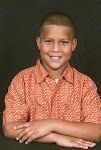
Koby Dionne Richardson celebrates his ninth birthday today, Tuesday, July 7, 2009. He is the son of Tanya Spears and Kirk Gupton of Angleton, Texas.
Tanya and Kirk will be serenading Koby tonight at the Chili's restaurant in Angleton with dinner and birthday cake. Joining in the celebration will be Koby's brothers Koy and DeMarcus and his cousin Trey.
Koby is an honor student at Angleton Elementary School, plays youth football (as pictured in lower photo with his daddy Kirk) in the fall and is currently involved with select baseball. He also loves to play basketball in the Angleton youth league.
Paw-Paw Tracy wishes lil' Koby a very happy ninth birthday and apologizes for not being able to attend the big party at Chili's tonight. My employer demands my presence at the ol' refinery tonight.